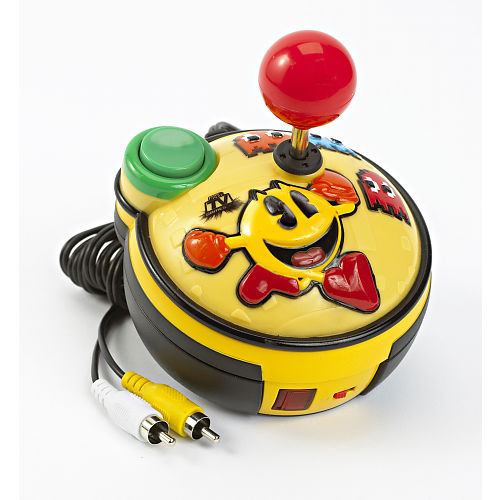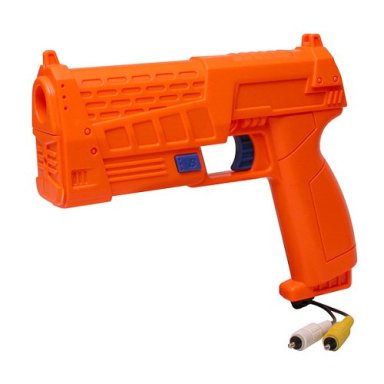
Plug-n-Play Video Game Market
|
|---|
The following is information posted on December 21st, 2005, and then subsequently modified, introducing the comprehensive plug-n-play listing files and providing instructions on how to read them. What is presented here condenses the content to absorb later updates into the main body:
|
A couple of years ago, I began keeping track of what plug-and-play games had been released by what companies. As each one has come out or been announced, I have added to my list. I finally figured that I ought to put the list up somewhere and share the knowledge, and this is as good a place as any.
Notes:
How to read the list: I'm attempting to attach the file to this post. I've never done this before, so if it doesn't work, then I can offer a full refund. Incidentally, to correct an earlier posting I made, the GameKey package (just the key, with no controller) I saw at Target for $10 had only one GameKey inside, not two. I hope this list is of some use. onmode-ky |
The following files are the various versions of the plug-n-play game system listings published in the AtariAge topic. Each successive listing contains all the information from earlier versions; the earlier versions are presented merely for historical interest. The newest file, with the most up-to-date and corrected information, is at the bottom of the list.
The following is information posted on September 13th, 2009 (and with additional data appended here later), regarding the evolution of packaging form factors for plug-n-play video game systems from Jakks Pacific and Radica Games (other companies in the marketplace either never changed form factors or were not consistent to begin with):
| - packaging evolution: jakks pacific tv games |
|---|
| 2001 | - (toymax activision) cardboard box, standard rectangular parallelepiped |
| 2002-2004 | - (atari joystick, namco 1, spongebob 1) cardboard box with L-shaped side cross section: tray with hard back and shaped clear plastic window |
| 2004 | - (jakks activision) transitional: shaped clear plastic window on thin cardboard backing; this model also appeared with next major packaging form |
| 2004 | - (portable namco 1) special packaging for this model only: blister pack |
| 2004 | - (gamekey-bundled holiday models) blister pack |
| 2004-2006 | - truncated (shorter tray) L-shaped cardboard box, with protruding shaped clear plastic window; summer 2004 (first 2004 models) to summer 2006 (namco 3 packaging took both this and next forms) |
| 2006-2009 | - blister pack, with exposed joystick; summer 2006 to summer 2009 |
| 2008 | - (g2 and ultimotion models) cardboard box, standard rectangular parallelepiped |
| 2009-2011 | - plastic box with trapezoidal side cross section; several older models revived with this packaging; summer 2009 to late 2011 |
| 2009-2014 | - (gun/microphone/motion controller models) cardboard box with trapezoidal side cross section; summer 2009 to late 2014 |
| 2010 | - (triple header sports, toy story mania) cardboard box, standard rectangular parallelepiped |
| 2011 | - (golden tee golf, cars 2) cardboard box, standard rectangular parallelepiped, no plastic handle, open window |
| 2012 | - (tv games touch models) blister pack |
| 2014 | - (hero portal models) cardboard box, standard rectangular parallelepiped, no plastic handle, clear plastic window; also vertical variant |
| 2015 | - (star wars blaster strike) cardboard box, standard rectangular parallelepiped, no plastic handle, clear plastic window covered by flap (variant: box w/o window or flap) |
| *atari joystick tv games has appeared with all 4 major packaging forms |
| - packaging evolution: radica arcade/play tv legends |
|---|
| 2004-2005 | - (taito, tetris, first few sega genesis) cardboard box with lopsided pentagon as top-down cross section |
| 2005-2006 | - cardboard box, standard rectangular parallelepiped |
The following is information posted on May 11th, 2010, regarding the history of the Japanese plug-n-play video game market since about 2000:
|
I thought I would post some findings from my recent research into the last decade or so of the Japanese plug-n-play game market. Unlike the American market, the [legal side of the] market in Japan has very few retro game compilations. Standalone, dedicated game systems existed, but most of them were single-game devices with motion gameplay (by which I mean Wii-like interfaces).
A large number of these used XaviX technology. Some of you may be familiar with the XaviXPORT game system that came out before the Wii but had little market presence. "XaviX" is actually the name of a family of processors by SSD (ShinSeDai) Company Ltd., and the XaviXPORT and its standalone siblings were all products created by SSD which used the XaviX processors. In what I think is a pretty rare setup, SSD not only designed a CPU (and its successors), but they also did product design, both hardware and software; it's possible they did some subcontracting, but generally speaking, they handled a lot of the production work. Actual distribution, marketing, and sales came from partners like Takara, Tomy, Bandai, Epoch, Hasbro, and even Square Enix. A large number of these systems used infrared emitter/sensor setups, along with reflective props, in the user interface implementation, and these made up a significant part of the Japanese plug-n-play market. Titles included anime licenses such as Dragonball Z, One Piece, Naruto, and Kekkaishi, and, though pricey in the 7000-8000 yen range, they were largely targeted as exercise games for children. As far as I know, the earliest of these types of plug-n-play systems came out around 2000 (plus or minus a couple of years). I myself have the 2003 Kenshin Dragon Quest system. In 2004, what I think is the first example of a legal multi-game retro plug-n-play system appeared in Japan: Sega Toys' Mega Drive Play TV. I used to think that Radica Games' Arcade Legends Sega Genesis system was a borrowing of work already done by Sega Toys for the Japanese market, but now I suspect that Sega Toys and Radica actually collaborated on this and intended to jointly market it worldwide from the beginning. The reason I think this is that even the Japanese versions of this product line use the American versions of the software. Sega Toys' website for these systems (Japan only got three of them, by the way, while we in the US got six total; the Outrun 2019, Menacer, and Super Sonic Gold systems were not released in Japan) has a line of fine print at the bottom that says the software on these systems are the American Genesis versions. And, I confirmed via an e-mail to their customer service department that the games only have English (later on, I also discovered that the Japanese Wikipedia page for this product line says they're only in English, and one of the Amazon.co.jp user reviews complains that it's English-only software despite the packaging showing pictures of the Japanese versions). This seems especially problematic for Ecco the Dolphin. Pricing for each of these models was around 4000 yen. In Japan, the first of the Mega Drive Play TV series was manufactured and distributed by Sega Toys, as noted on the website, but the site's pages for the subsequent models attribute manufacture and distribution to Radica. Also worth noting, these later two models switched to Radica's distinctive US/EU packaging form factor (of course, for the latter 3 models, that never came out in Japan, Radica stopped using that packaging). In 2006, the first home-grown retro plug-n-play systems showed up in Japan in the form of Namco Nostalgia 1 & 2 and Taito Nostalgia 1 & 2, from Bandai, under the "Let's! TV Play Classic" brand (an extension of their "Let's! TV Play" motion game line). These actually also used XaviX technology, along with a very consumer-unfriendly setup for power and output: you had to buy a separately sold proprietary AV/power cable in order to play any of the units (note the lack of a battery power option, though there was a battery backup of some sort, as evidenced by a "Load" option at the game title screens). This was made worse by what seems to have been a recall of that cable. Each of the units in this series came with 2 retro games and 2 remixes of those same games. In the case of the Namco games, the remixes used a similar setting but with a different type of gameplay, while the Taito games' remixes used characters with different abilities under the same gameplay. Another difference, the Namco series are labeled as "8M ROM" (megabytes? megabits?), while the Taito series are "16M ROM."
Namco Nostalgia 1:
Namco Nostalgia 2:
Taito Nostalgia 1:
Taito Nostalgia 2: With the exception of Xevious and Mappy, none of these titles were ever released in any US plug-n-play collections. Unfortunately, it seems the series did not sell well (some user reviews at Amazon.co.jp cite incomplete fidelity to the arcade originals), as the announced Namco Nostalgia 3 was cancelled. This was to be released about 4 months after the initial lineup, and it was to include Druaga no Tou (The Tower of Druaga) and Chouzetsu Rinjin Berabouman (Bravoman). Notably, this would have been only the second port of Bravoman in history.
Some final notes about the Let's! TV Play Classic series: To my knowledge, no further retro plug-n-play systems were released in Japan after this. The "old game fans" target audience was either too small or too unwilling to support the market (it is worth noting that 2006 was a year of decline in the US plug-n-play market as well). In contrast, there have been further single-game motion systems based on XaviX technology.
Some of my resources:
Totally unrelated to the above: onmode-ky |
The following is information posted on June 23rd, 2015, regarding the substitute equipment needed in lieu of the proprietary AV/power cable for the Let's! TV Play Classic systems (mentioned in the above block of information concerning the history of the Japanese plug-n-play video game market since about 2000; the information below is an excerpt from its source forum post, omitting the portions which are unrelated to the subject of substitute equipment):
|
Here's what you need to replace the proprietary cable:
1. AC adapter: You need a 5V DC, center-positive adapter, and it needs to be able to handle 0.4 amps at a minimum. If you have an Intellivision Flashback or a ColecoVision Flashback (or both, like me), congratulations! You already have an electrically compatible AC adapter. However, the Let's! TV Play Classic systems take a cylindrical power plug with a 4.0mm outer diameter and 1.7mm inner diameter (i.e., it's what's known as an EIAJ-02 connector; the PSP AC charging cable uses this plug). The INTV/CV Flashbacks' AC adapter has a plug with a 5.5mm outer diameter and 2.1mm inner diameter. I found a little adapter cable for exactly that conversion on eBay for just $4, and that was my only expense in this endeavor to mimic the proprietary cable. 2. AV cable: You need a cable with a 3.5mm, 4-ring plug at one end and composite video + stereo audio RCA plugs at the other end. The cable's 4 lines need to be ordered thus, going from the ring at the 3.5mm plug's tip end to the ring at its base: white (left audio), yellow (video), ground, red (right audio). This ordering is the same as what most camcorders use for their composite video cables. It is not the same order as what iPods used to use back when they had a 3.5mm video port, BUT since those old iPod video cables did have ground on the same ring, they'll work if you shift the colors of the RCA plugs. Note that there are video cables out there which have ground at a different ring position (usually on the ring at the base, I think), and those are not going to work. I have neither a camcorder nor a video cable for one, but I remembered that I had an extra Kenshin Dragon Quest video cable. That's a plug-n-play game system whose underlying hardware is from the same family as that of the Let's! TV Play Classic systems, ShinSeDai's XaviX technology. I figured that that game's video cable would probably be electrically compatible, and whew! I was right. 3. Possible required modding: The proprietary cable's special plug fits into a recessed part of the Let's! TV Play Classic system casing. The system's power and video ports are side by side at the "back wall" of the hollow. In order to fit into this indentation, your power and AV plugs' head casings need to be at most ~9mm thick, for a length of ~1cm from the base of the metal back toward the cabling. And, in case it isn't obvious, a right-angle plug head will not fit into this indentation at all. In my case, the 4.0mm/1.7mm plug on the adapter I bought for my AC adapter had no trouble fitting. However, I had to do a bit of whittling on my Kenshin Dragon Quest AV cable's plug. Once you have an electrically compatible AC adapter and AV cable, along with plugs that can reach the ports in the proprietary slot, you're all set. |
The following is information posted on May 23rd, 2010 (and with additional data appended here later), regarding plug-n-play product line names under assorted manufacturers.
| Manufacturer | Plug-n-Play Product Line |
|---|---|
| Atari | Flashback |
| AtGames | Flashback (2014 onward; note: ownership of the actual "Atari Flashback," "Intellivision Flashback," and "ColecoVision Flashback" marks are retained by their respective IP holders) |
| Conny | PDC (Pocket Dream Console; handhelds) |
| Dreamgear | My Arcade |
| Jakks Pacific | [Plug It In & Play] TV Games; Hero Portal |
| Majesco | TV Arcade |
| Mammoth Toys | TV Board Games (introduced after their C64 DTV) |
| Namco Bandai | Let's! TV Play Classic (subset of Let's! TV Play motion game product line) |
| PDP | VG Pocket (handhelds) |
| Radica | Arcade Legends; renamed to Play TV Legends in 2005 (subset of Play TV motion game product line) |
| Sega | Mega Drive Play TV |
| Senario | VS Maxx |
| Techno Source | [Plug in for] TV Play |
| Thinkway | M.A.G. (Motion Activated Gear) |
| ToyQuest | N-Vision |
The following is information posted on May 23rd, 2010, (a different excerpt from the same posting which contained the product line names data) regarding the manufacturer Conny Technology, with some reference to their French client Videojet:
|
. . . In addition to adding the Japanese data I discussed earlier in this thread, with dates, the 20100523 edition of the listing also moves Videojet from the non-American section of the file to the generics section. This is because most of Videojet's releases have been French distribution of X-in-1 products from Chinese manufacturer Conny. Conny, like Jungletac, appears to be an OEM supplier of handheld plug-n-play systems with in-house game content, though I have seen self-branded packaging as well. Ironically, Videojet's website has better coverage of Conny's content than Conny's own website, even including demo video of every game on each unit. Conny's site has not even been updated since early 2006, which actually predates the earliest sales of their products that I am aware of: Takara Tomy's distribution of their Pocket Dream Console in Japan later that year.
[unrelated post text removed from here] Here's something amusing I noted while researching Conny's PDC systems. In 2006, when NCSX showed a preview of the Takara Tomy release of the original PDC, they showed screenshots of several of the games, one of them being a clone of Puzz Loop (of which Zuma is also a clone). Gameplay footage I later found of this PDC game showed that a string of text, "2007 Licensed from Mitchell Corporation," had been added to the bottom of the gameplay screen. Mitchell Corporation is the owner of Puzz Loop. Releasing the clone in Puzz Loop's homeland of Japan must have incurred some legal threats. :) onmode-ky |
The following is information posted on July 8th, 2010, regarding what model CPUs have been used in which plug-n-play game systems; the "new section [appended] to the first post in this topic" referenced in the text is here presented immediately following it (and with additional data appended later):
|
I have appended a new section to the first post in this topic. This section shows everything I know regarding the model numbers of what specific processors are used in which plug-n-play games. It's in the topic's first post since I have indefinite edit privileges on that post, allowing for future additions to the section. The section does not include any of the systems which are known to be binary-compatible with earlier hardware (the Atari Flashback 2/2+, the C64 DTV, and the Sega Genesis units from Radica Games; I'm no longer sure about the Sega Master System units [I have since reconfirmed that the plug-n-play systems based on the Sega Master System and Game Gear do indeed run on an SMS-on-a-chip.]), which, while using instruction sets from known processors, run on newly designed chips that thus have different model numbers.
The product names I am using mirror those used in my pnpgames.*.txt listings, minus any parentheticals (which generally just denote cosmetic variations). The "information source" column, when cross-referenced with the source legend, shows where I got the processor information for a given product. I should also note that the accelerometer-equipped products listed in the new section are not in the pnpgames.*.txt listings, since they are games controlled by body motion. [Plug-n-play game systems based on body motion are now tracked in the pnpgames_supplement.*.txt listings.] Looking at the data I have so far, it seems that the SPG110 was Sunplus' rendition of the NOAC concept [I have since been informed that this is not the case. In fact, the SPG110 was the chip in Jakks Pacific's EA Sports TV Game system (which contained two Sega Genesis games, NHL 95 and either Madden 95 or FIFA 96, depending on region); the original M68000 Genesis assembly code for these games was translated into unSP (Greek "mu"-nSP) assembly for the SPG110 chip in the TV Game, through a tool developed by project co-lead engineer John Harris. If you're aware of the differences between the two processors' architectures, you should be quite impressed.]. Over the years, there has been speculation that some plug-n-play game systems, including NOACs, may be Winbond-based, but I have not found any specific cases of Winbond-based plug-n-play games at this time, only Sunplus. [I have seen forum postings citing anonymous sources which attribute the first four Jakks Pacific TV Games systems (Activision, Atari joystick, Namco Pac-Man, SpongeBob SquarePants) to Winbond, but with the sources being unverifiable and with no further information available, I am leaving them out of the below table.] [Second Addendum: As now noted in the below table, the Atari Paddle TV Game system has been confirmed to have been built on Winbond hardware, though the specific chip model was not identified.] [Additional Note (some of this information is now overriden by Additional Note 2, below): Some of the Sunplus GPAC800 entries in the below table have Generalplus names beside them, "GPL16250," in parentheses. These are products where my source(s) identified them specifically as using the noted Generalplus chips; however, I am primarily labeling them as GPAC800s due to the GPL16250 being basically equivalent to the GPAC800. Similarly, for systems where the information source indicates they are based on the Sunplus PAC300, a chip essentially equivalent to the Sunplus SPG240, I have primarily labeled them as SPG240s, with "PAC300" noted alongside in parentheses. The PAC300 appears to be the Jakks Pacific edition of the SPG240, a moniker specifically for that firm's large-quantity batches of the chip.] [Additional Note 2: What was earlier listed as "Sunplus GPAC800" has been corrected to "Generalplus GPAC800" in the table, and similarly for "Sunplus GPAC500"; the PAC and GPAC numbers are Jakks Pacific part numbers for Sunplus and Generalplus chips, respectively.] [paragraph pointing readers to this website removed from here] onmode-ky [unrelated postscript, about Jakks Pacific TV Game debug modes, removed from here and moved to here] |
| Product | Processor | Information Source |
|---|
| # jakks pacific |
| namco ms. pac-man | Sunplus SPG220 or SPG240 | ;;04 |
| atari paddle | Winbond W55x-family (likely one of W55V91-W55V94) | ;;04 |
| classic arcade pinball | Sunplus SPG110 | ;;04 |
| blue's clues | Sunplus SPG110 | ;;04 |
| super silly makeover | Sunplus SPG110 | ;;01 |
| spongebob dilly dabbler | Sunplus SPG110 | ;;01 |
| tele-doodle | Sunplus SPG110 | ;;04 |
| disney | Sunplus SPG110; PAC300 for GameKey-capable conversion? | ;;04 |
| world poker tour | Sunplus SPG110 | ;;01 |
| spider-man | Sunplus SPG110, then PAC300 | ;;04 |
| ea sports | Sunplus SPG110 | ;;04 |
| [the] batman | Sunplus SPG220 or SPG240 | ;;04 |
| midway mortal kombat | Sunplus SPG240 (Sunplus PAC300) | ;;04 |
| star wars iii | Sunplus SPG240 (Sunplus PAC300) | ;;04 |
| nicktoons | Sunplus SPG110 | ;;04 |
| fantastic four | Sunplus SPG240 | ;;02 |
| fantastic four | Sunplus SPG220 | ;;08 |
| disney princess | Sunplus SPG110 (most likely) | ;;04 |
| dragonball z | Sunplus SPG200 | ;;04 |
| dora the explorer | Sunplus SPG240 | ;;04 |
| care bears | Sunplus SPG240 (Sunplus PAC300) | ;;04 |
| disney friends | Sunplus SPG240 (cited as both Sunplus SPG200 + PAC300) | ;;04 |
| dora's nursery rhyme adv | Sunplus SPG240 | ;;04 |
| winnie the pooh | Sunplus SPG240 (Sunplus PAC300) | ;;04 |
| power rangers | Sunplus SPG240 | ;;04 |
| superman | Sunplus SPG240 (cited as both Sunplus SPG200 + PAC300) | ;;04 |
| shrek | Sunplus SPG240 | ;;04 |
| x-men | Sunplus SPG240 (Sunplus PAC300) | ;;04 |
| avatar | Sunplus SPG240 (cited as both Sunplus SPG200 + PAC300) | ;;04 |
| thomas the tank engine | Sunplus SPG110 | ;;04 |
| disney princess magical adv's | Sunplus SPG240 | ;;04 |
| disney/pixar classics | Sunplus SPG240 | ;;04 |
| nicktoons summer camp | Sunplus SPG240 | ;;04 |
| marvel heroes | Sunplus SPG240 | ;;04 |
| star wars original trilogy | Sunplus SPG240 (Sunplus PAC300) | ;;04 |
| spider-man 3 movie | Sunplus SPG240 | ;;04 |
| spongebob jellyfish dodge | Sunplus SPG240 (Sunplus PAC300) | ;;04 |
| pirates of the caribbean | Sunplus SPG240 (Sunplus PAC300) | ;;09 |
| cheetah girls | Sunplus SPG240 | ;;04 |
| dora smart cookie | Sunplus SPG240 | ;;04 |
| spider-man in villain round-up | Sunplus SPG240 (cited as both Sunplus SPG200 + PAC300) | ;;04 |
| disney princess sleeping beauty | Sunplus SPG240 (Sunplus PAC300) | ;;09 |
| dora's world adventure | Sunplus SPG240 | ;;04 |
| high school musical | Sunplus SPG240 | ;;04 |
| smarter than a 5th grader | Sunplus SPG240 | ;;04 |
| wheel of fortune 2 | Sunplus SPG240 (Sunplus PAC300) | ;;04 |
| wall-e | Sunplus SPG240 (Sunplus PAC300) | ;;09 |
| g2 hannah montana guitar | Generalplus GPL162xx | ;;11 |
| ultimotion swing zone sports | Generalplus GPAC800/accelerometer | ;;04 |
| ultimotion disney fairies/sleeping beauty | Generalplus GPAC800 (Generalplus GPL16250)/accelerometer | ;;04 |
| ultimotion playhouse disney | Generalplus GPAC800 (Generalplus GPL16250)/accelerometer | ;;04 |
| g2 hannah montana deluxe | Generalplus GPAC800 | ;;09 |
| g2 high school musical deluxe | Generalplus GPAC800 | ;;09 |
| namco pac-man retro arcade | Sunplus SPG240 (Sunplus PAC300) | ;;07 |
| power rangers to the rescue | Generalplus GPAC500 | ;;03 |
| disney princess cinderella | Sunplus SPG240 | ;;04 |
| spider-man and masked menace | Generalplus GPAC500 | ;;02 |
| big buck hunter pro | Sunplus SPG293/IR+lightgun | ;;04 |
| spongebob bikini bottom 500 | Generalplus GPAC800/accelerometer | ;;04 |
| star wars the clone wars republic squadron | Generalplus GPAC800/accelerometer | ;;04 |
| power rangers force in time | Generalplus GPAC800/accelerometer | ;;02 |
| sing scene pop | Generalplus GPAC800 | ;;09 |
| sing scene country | Generalplus GPAC800 | ;;09 |
| ultimotion fitness | Generalplus GPAC800 (Generalplus GPL16250)/accelerometer | ;;04 |
| disney tinker bell and the lost treasure | Generalplus GPAC800/accelerometer | ;;02 |
| phineas and ferb best game ever | Generalplus GPAC800/accelerometer | ;;09 |
| toy story toys on the move | Generalplus GPAC800/accelerometer | ;;04 |
| toy story mania | Generalplus GPAC800/IR+lightgun | ;;04 |
| golden tee golf | Generalplus GPAC800 | ;;04 |
| cars 2 | Generalplus GPAC800 | ;;04 |
| big buck safari | Sunplus SPG293/IR+lightgun | ;;04 |
| taito space invaders | Generalplus GPAC800 | ;;04 |
| walking dead zombie hunter | Generalplus GPAC800/IR+lightgun | ;;04 |
| duck commander | Generalplus GPAC800/IR+lightgun | ;;04 |
| star wars clone trooper | Generalplus GPAC800/IR+lightgun | ;;04 |
| hero portal tmnt | Generalplus GPL32612 | ;;13 |
| hero portal dc super heroes | Generalplus GPL32612 | ;;13 |
| hero portal power rangers | Generalplus GPL32612 | ;;13 |
| walking dead battleground | Generalplus GPAC800/IR+lightgun | ;;04 |
| hero portal dreamworks dragons | Generalplus GPL32612 | ;;13 |
| star wars blaster strike | Generalplus GPL32612/IR+lightgun | ;;13 |
| # majesco |
| frogger | VR Technology VT02 | ;;04 |
| konami arcade classics | VR Technology VT02 | ;;04 |
| # hasbro |
| mission paintball | Sunplus SPG200 | ;;04 |
| dream life | Sunplus SPG240 | ;;05 |
| dream life superstar | Sunplus SPG240 | ;;05 |
| star wars clone trooper blaster | Sunplus SPG243/lightgun | ;;02 |
| # mattel fisher-price |
| smart cycle | Sunplus SPG240 | ;;15 |
| # atari |
| atari flashback | Novatek NT6578 | ;;04 |
| atari flashback 2 | Michele | ;;04 |
| atari flashback 2+ | Michele | ;;04 |
| # sdi technologies kiddesigns tech2go |
| tmnt battle for the city | Sunplus SPG240 or SPG220 | ;;04 |
| tmnt mutant & monster mayhem | Sunplus SPG240 or SPG220 | ;;04 |
| tmnt the way of the warrior | Sunplus SPG220 | ;;12 |
| knd operation PLUGGUHS | Sunplus SPG2xx (likely SPG240) | ;;04 |
| # mga |
| bratzlife | Sunplus SPG291 | ;;04 |
| bratz math in the mall | Sunplus SPG288 | ;;06 |
| # tommo |
| neogeo x | Ingenic JZ4770 | ;;13 |
| # retro-bit |
| generations | Actions ATJ2279B | ;;13 |
| # nintendo |
| nes classic edition | Allwinner R16 | ;;13 |
| classic mini famicom | Allwinner R16 | ;;13 |
| super nes classic edition | Allwinner R16 | ;;13 |
| classic mini super famicom | Allwinner R16 | ;;13 |
| # wisdom tree (piko interactive) |
| arkade | VR Technology VT02 | ;;16 |
| # snk corp |
| neogeo mini | Actions ATM7013 | ;;13 |
| neogeo mini international | Actions ATM7013 | ;;13 |
| # sony |
| playstation classic, intl | MediaTek MT8167A | ;;13 |
| playstation classic, jp ed | MediaTek MT8167A | ;;13 |
| # atgames |
| [sms/gg systems] | Noza | ;;14 |
| [genesis/mega drive systems (since 2008?)] | RedKid/RedKid 2 | ;;14 |
| atari flashback 3 | Titan | ;;04 |
| atari flashback 4 | Titan | ;;04 |
| atari flashback 64 | Titan | ;;04 |
| intellivision flashback | Titan | ;;07 |
| atari flashback 5 | Titan | ;;07 |
| colecovision flashback | Titan | ;;07 |
| atari flashback 6 | Titan | ;;07 |
| atari flashback 7 | Titan | ;;07 |
| atari fb portable 2016 | Monkey King 2 | ;;16 |
| atari fb portable 2017 | Monkey King | ;;04 |
| sega gen flashback | Monkey King 3.6 | ;;13 |
| # retro computers |
| sinclair zx [spectrum] vega | Freescale i.MX233 | ;;13 |
| # pqube (blaze) |
| atari retro handheld | Allwinner F1C100s | ;;13 |
| # retro games ltd |
| thec64 mini, uk ed | Allwinner A20 | ;;13 |
The following is information posted on July 8th, 2010, in the form of a postscript to the Plug-n-Play CPU Data posting, regarding accessing debug modes in several of Jakks Pacific's TV Games models; this paragraph is then followed by an excerpt from a post made on August 11th, 2010, in a thread started by a different user, containing further such information. Beyond that is a table, originally based on data posted on December 10th, 2010 (and with additional data appended later), collecting the known code sequences for triggering hidden modes in plug-n-play game systems (unless otherwise noted, the sequences are entered at the boot screen):
| P.S. I recently read about the method for getting into the debug mode of several Jakks Pacific TV Games systems. At the very first screen after turning on the unit, push up, press and hold the 'A' button, and then push down while still holding the button. That should get you to the first screen of the debug mode. I can confirm that this works for the Namco 2, Namco 3, and Capcom TV Games. The best part of the debug mode is probably the ability to hear all of each system's effects/music sequences. For Namco 3 (Super Pac-Man), though, you can't get past the first screen, because there is no 'B' button on the unit; its debug mode seems to be from a later revision of Namco 2, which has a 'B' button. |
| I discovered recently that the "joystick up, press-and-hold 'A' button, joystick down" sequence upon booting brings up the debug mode on both the wireless Ms. Pac-Man TV Game and this one, in addition to the wired Ms. Pac-Man, Super Pac-Man, and Capcom TV Game models I tested earlier (I have confirmed it does not work for either the original Pac-Man model or the "Arcade Gold" 8-game model, nor for the Dragon Ball Z model). What's particularly interesting about the debug mode for this model is that the sound test portion includes sound effects and music for 2 Namco titles which are not actually on the device--or at least not available from the main menu. The first is Ms. Pac-Man, a game which has at least appeared in other TV Game models, and the second is Jr. Pac-Man, a game which has not appeared in any plug-n-play form. I seriously wonder whether either or both of these games may be hidden on this system, accessed via some easter egg or code. However, it seems a little unlikely, given that the packaging's copyright info probably has to include all the onboard games, hidden or not. Maybe it was intended to be included but was left out before production started. Still, it's a little strange to see that they went and kept the music and sound effects built into the production units, even if only accessible from the debug mode. |
| Product | Code Type | Code Sequence |
|---|
| # jakks pacific |
| namco ms. pac-man (both wired and wireless) | debug | joystick up, press-and-hold 'A' button, joystick down |
| blue's clues | debug | joystick right, press both buttons |
| tele-doodle | easter egg (programmer's credit) | joystick up, press-and-hold button, joystick clockwise back to up, release button, joystick counterclockwise back to up (unconfirmed; button hold may be on counterclockwise portion) |
| care bears | debug | joystick up, joystick clockwise back to up, press 'A' button while joystick still up |
| capcom | debug | joystick up, press-and-hold 'A' button, joystick down |
| namco super pac-man | debug | joystick up, press-and-hold 'A' button, joystick down |
| namco pac-man retro arcade | debug | joystick up, press-and-hold 'A' button, joystick down |
| star wars clone trooper | easter egg (endless mode) | at main menu, fire 7 shots in the shape of the letter 'E' (upper right corner, upper left corner, middle of left side, screen center, middle of left side, lower left corner, and lower right corner, in that order) |
| # atari |
| atari flashback 2/2+ | debug | press-and-hold system's Reset and Select buttons while powering it on |
| atari flashback 2/2+ | easter egg (paddle games menu) | at main menu, press up on the joystick 1 time, down 9 times, up 7 times, down 2 times (representing 1972, the birth year of atari and pong) |
| # atgames |
| atari flashback 3 | debug | press-and-hold system's Start and Select buttons while powering it on |
| atari flashback 4 | debug | press-and-hold system's Start and Select buttons while powering it on |
| intellivision flashback | debug | press-and-hold any opposite-sides pairing of the side buttons, other than upper left + upper right, on controller while powering on system |
| atari flashback 5 | debug | press-and-hold system's Start and Select buttons while powering it on |
| colecovision flashback | debug | press-and-hold both side buttons on controller while powering on system |
| atari flashback 6 | debug | press-and-hold system's Start and Select buttons while powering it on |
| atari flashback 7 | debug | press-and-hold system's Start and Select buttons while powering it on |
| atari fb portable 2016 | debug | press-and-hold A, R, and S buttons while powering it on |
| atari fb portable 2017 | debug | press-and-hold A, R, S, P, L, and T buttons while powering it on |
The following is information posted on December 10th, 2010 (and with additional data appended here later), regarding the types and capacities of memory used in certain plug-n-play game systems:
| Other information I recently obtained includes some details about the memory types and capacities used in several plug-n-play systems. In the TV Games line, most systems seem to have contained 2 MB of ROM for game assets and, if they had game save capacity, 4 Kbits of EEPROM. There were a few exceptions, though. Here are some that I know: |
| Product | Memory Details |
|---|
| # jakks pacific |
| midway mortal kombat | 6 MB ROM, 256 KB extra SDRAM for swapping graphics data during mid-match opponent character switch (and presumably standard 4 Kbits EEPROM) |
| superman | 4 MB ROM |
| shrek | 4 MB ROM, 4 Kbits EEPROM |
| avatar | "probably 4 MB" ROM |
| spider-man in villain round-up | "probably 4 MB" ROM |
| high school musical | 8 MB ROM, 4 Kbits EEPROM |
| ultimotion disney fairies/sleeping beauty | 0 ROM, 64 MB NAND, 8 MB SDRAM, 16 Kbits EEPROM |
| ultimotion playhouse disney | 0 ROM, 64 MB NAND, 8 MB SDRAM, 16 Kbits EEPROM |
| ultimotion fitness | 0 ROM, 64 MB NAND, 8 MB SDRAM, 8 Kbits EEPROM |
| vmigo spider-man (base unit) | 8 MB ROM, 256 KB SRAM, 16 Kbits EEPROM |
| big buck hunter pro | 0 ROM, 64 MB NAND, 8 MB SDRAM |
| taito space invaders | 8 MB ROM (not quite 100% certain) |
| big buck safari | 0 ROM, 64 MB NAND, 8 MB SDRAM |
| golden tee golf | 8 MB SDRAM |
| walking dead zombie hunter | 0 ROM, 64 MB NAND, 8 MB SDRAM |
| duck commander | 0 ROM, 64 MB NAND, 32 MB SDRAM |
| star wars clone trooper | 0 ROM, 64 MB NAND, 32 MB SDRAM |
| hero portal tmnt | 0 ROM, 128 MB NAND, 16 (from a source inaccurate on NAND) Kbits EEPROM |
| hero portal dc super heroes | 0 ROM, 128 MB NAND, 16 (from a source inaccurate on NAND) Kbits EEPROM |
| hero portal power rangers | 0 ROM, 128 MB NAND, 16 (from a source inaccurate on NAND) Kbits EEPROM |
| walking dead battleground | 0 ROM, 128 MB NAND, 32 MB SDRAM |
| hero portal dreamworks dragons | 0 ROM, 128 MB NAND |
| star wars blaster strike | 0 ROM, 128 MB NAND |
| # sdi technologies kiddesigns tech2go |
| tmnt battle for the city | 4 MB ROM (not quite 100% certain) |
| tmnt mutant & monster mayhem | 4 MB ROM (not quite 100% certain) |
| # namco bandai (bandai america) |
| pac-man connect-and-play | 8 MB SDRAM |
| # retro-bit |
| generations | 64 MB DDR SDRAM |
| # nintendo |
| nes classic edition | 0 ROM, 512 MB NAND, 256 MB DDR3 SDRAM |
| classic mini famicom | 0 ROM, 512 MB NAND, 256 MB DDR3 SDRAM |
| super nes classic edition | 0 ROM, 512 MB NAND, 256 MB DDR3 SDRAM |
| classic mini super famicom | 0 ROM, 512 MB NAND, 256 MB DDR3 SDRAM |
| # snk corp |
| neogeo mini | 0 ROM, 4 GB NAND, 128 MB DDR3 SDRAM |
| neogeo mini international | 0 ROM, 4 GB NAND, 128 MB DDR3 SDRAM |
| # sony |
| playstation classic, intl | 0 ROM, 16 GB NAND, 1 GB DDR3L SDRAM |
| playstation classic, jp ed | 0 ROM, 16 GB NAND, 1 GB DDR3L SDRAM |
| # atgames |
| intellivision flashback | 0 ROM, 4 MB NOR, 2 MB SDRAM |
| atari flashback 5 | 0 ROM, 4 MB NOR, 2 MB SDRAM |
| colecovision flashback | 0 ROM, 2 MB NOR, 2 MB SDRAM |
| atari fb portable 2016 | 8 MB SDRAM |
| sega gen flashback | 0 ROM, 2 GB NAND, 256 MB DDR3 SDRAM |
| # retro computers |
| sinclair zx [spectrum] vega |
(design minimum specs) 0 ROM, 32 MB flash, 8 MB DDR SDRAM; (actual) 0 ROM, 64 MB NOR, 16 MB DDR SDRAM |
| # retro games ltd |
| thec64 mini, uk ed | 0 ROM, 256 MB NAND, 256 MB DDR3 SDRAM |
The following is information posted on December 10th, 2010 (and with additional data appended here later), regarding unreleased plug-n-play game projects (i.e., either finished but not released or canceled during development; the sources of these data are developers, not press release product or licensing announcements), followed by information posted on April 21st, 2011, regarding ESRB listings for unreleased plug-n-play game systems:
| Product | Description |
|---|
| # jakks pacific |
| Midway | included Joust, Defender, Sinistar, Stargate, and Toobin'; the Mortal Kombat TV Game was a spin-off of this project; this seems to have been a Sunplus SPG110 project, though conversion to SPG240 would have been needed, if they were later planned to release as GameKeys for a GameKey-compatible re-release of the Mortal Kombat unit |
| Capcom | a second Capcom TV Game that included Mega Man and Section Z (clarifying details here) |
| PGA Tour Golf II | - |
| Tecmo | included Mighty Bomb Jack, Solomon's Key, Tecmo Bowl, Tecmo Basketball, and Fire 'N Ice; was probably a Sunplus PAC300 project, and at least Tecmo Bowl would have had link-up support |
| Pokémon | see entry in Image Archive |
| Brain Surge (ESRB listing: Super Brain Surge) | - |
| Jr. Pac-Man | intended release plans unknown, but a conversion of this arcade title was made; the only portions of this which were actually released were its sound assets, available to browse in certain Namco TV Games systems' debug modes |
| Disney Princess | not to be confused with the numerous earlier Disney Princess releases, this one was worked on from 01/2009 to 08/2009; an accelerometer-based motion game built on the typical Generalplus GPAC800 configuration, it was finished but not released (this game may be what is listed in the ESRB ratings database as "Disney Princess: Fairy Tale Adventures," whose title and description do not seem to correspond to any released Jakks Pacific plug-n-play product) |
| Kitchen Kraze | announced at the 2010 American International Toy Fair, this game was to have been similar to Cooking Mama, and one of its components was called "Cooking Frenzy" (or this may have been an alternate working title); the project got as far as the beta stage |
| Big Buck Hunter Pro/Big Buck Safari combo | while not confirmed as having had its release plans dropped, I can find no evidence that this combination unit, with both Big Buck Hunter Pro and Big Buck Safari on a 128 MB NAND ROM, was actually sold anywhere |
| Cut the Rope | announced at the 2012 American International Toy Fair as the lead product of Jakks Pacific's new touchpad-based TV Games Touch line, this plug-n-play rendition of the ZeptoLab mobile game seems to have had at least some prototyping work done; however, unlke the other entries in the TV Games Touch line, which were previous TV Games systems ported to touchpad controls by Code Mystics, this system never appeared at retail, and the identity of the developer that worked on the project remains a mystery |
| Duck Commander, 2-player edition | an update to the 2013 Duck Commander single-player light gun shooter, this appears as a late 2013 project in the LinkedIn pages of a number of Super Happy Fun Fun (known then as Merge Interactive) employees of that time, but it seems never to have been released--perhaps fallout from the controversial comments made at the end of 2013 by a member of the family owning the Duck Commander company (this is speculation on my part); compared to the single-player edition, this system doubled the amount of NAND ROM space, to the same 128 MB as Jakks/SHFF's released 2014 light gun shooter, The Walking Dead: Battleground (the increased space allowed for uncompressed assets, thus decreasing the game's load times) |
| Dragonball Z GameKey | said to contain "an improved fighting game and a puzzle game" |
| Fantastic 4 GameKey | canceled |
| Winnie the Pooh GameKey |
|
| # mga |
| Crazy Coaster | described as being similar to RollerCoaster Tycoon, this 2007 project, mostly confirmed as having been built on the Sunplus SPG240, was done by Handheld Games affiliate VidKid Games; the game was finished, but MGA Entertainment opted not to release it |
| [PopCap Games] | this collection of PopCap's Bejeweled 2, Chuzzle, and Feeding Frenzy (or possibly Feeding Frenzy 2), whose final name may have been meant to be something other than "PopCap Games," was developed and completed by VidKid Games for MGA Entertainment; the game led to litigation by VidKid against MGA, the subject of a breach of contract claim that the toymaker did not pay $170,000 owed for the project |
| # jazwares |
| Fruit Ninja Interactive Sensei Sword | announced at the 2012 American International Toy Fair, with a prototype demonstrated to Fair attendees, this plug-n-play adaptation of the Halfbrick mobile game never appeared again, and the Fruit Ninja audio accessories which Jazwares simultaneously announced also never materialized; 2013 brought a new Fruit Ninja consumer electronics licensee, Impecca USA, so it seems possible that perhaps Jazwares lost its license during 2012 and thus could not release anything |
| # atgames |
| Sega Genesis Arcade Nano Marshmallow | AtGames is known to have released 3 Genesis collections in their Arcade Nano series of miniature plug-n-play systems, but there were four other models which seem to have never made it to market; this one was a Genesis collection that included Ecco the Dolphin, Ecco Jr., Flicky, Puyo Puyo, and Columns, and was to come with stickers. A review sample made an appearance at http://zilchified.blogspot.com/2010/12/review-sega-arcade-nano-by-at-games.html |
| Sega SMS/GG Arcade Nano Altered Beast | one of the four AtGames Arcade Nano systems which seem to have never made it to market, this was a SMS/GG collection that included Altered Beast and 3 other games (the mockup packaging touted 4 total games) |
| Sega SMS/GG Arcade Nano Sonic Blast | one of the four AtGames Arcade Nano systems which seem to have never made it to market, this was a SMS/GG system that included Sonic Blast alone; this model is the only one to have ever shown up for sale, though only in a very limited quantity, and from a single eBay seller, gamers-vault |
| Sega SMS/GG Arcade Nano Casino | one of the four AtGames Arcade Nano systems which seem to have never made it to market, this was a SMS/GG collection that included either 3 games (according to its Web page) or 4 (according to its mockup packaging) |
|
I also know of a few unreleased, Sunplus-based plug-n-play projects commissioned by Hasbro |
|
The ESRB ratings database turns out to contain a rare glimpse into the world of unreleased plug-n-play systems. Games that are rated by the ESRB are at least complete enough for the publisher to submit gameplay footage demonstrating the titles' "pertinent content," as defined by the ESRB. Therefore, any unreleased title appearing in the database is at least in a nearly complete state, or perhaps even entirely finished by the developer. However, the database's entries are not entirely reliable; at least, some of them contain information contrary to other sources or even, sometimes, other entries in the database itself (that is, I have seen duplicate entries, sometimes under slightly different names, and entries with names indicating alternate release strategies). Also, some of what the ESRB has in its plug-n-play category does not normally fall under that term, like games downloaded directly to a TV. Still, if you can find your way through the irrelevant data, then you can discover a few plug-n-play games that were produced but never saw the light of release day. As it turns out, the vast majority of these were entries in Jakks Pacific's GameKey expansion cartridge line, the sole exceptions being their Tecmo and Super Brain Surge TV Game systems. Obviously, Jakks was eager to push the GameKey concept, but they must have encountered resistance at retail. These are the unreleased plug-n-play game systems recorded in the ESRB ratings database (presumably listed in chronological order, from oldest to most recent): |
| Rated Title | Rating | Content Descriptors, Other Notes |
|---|---|---|
| Midway Gamekeys - Joust/Sinistar |
|
Mild Violence
This is listed at the ESRB as a GameKey, but there was never a Midway base unit into which GameKeys could be plugged. The contents of this and the other Midway GameKey listing were likely originally planned for a standalone unit, based on developer commentary. |
| Midway Gamekey - Defender/Toobin |
|
Animated Blood, Mild Violence
This is listed at the ESRB as a GameKey, but there was never a Midway base unit into which GameKeys could be plugged. The contents of this and the other Midway GameKey listing were likely originally planned for a standalone unit, based on developer commentary. |
| Tecmo TV Games |
|
No Descriptors |
| Batman TV Games GameKey |
|
Cartoon Violence |
| Star Wars GameKey-Catamaran Strike/Coruscant Fire Patrol |
|
Fantasy Violence
Not to be confused with the released Star Wars GameKey. |
| Dragon Ball Z GameKey - Butoretsuden 2/Capsule Conquer |
|
Cartoon Violence |
| Fantastic Four Gamekey |
|
Fantasy Violence |
| Wheel of Fortune TV Games Gamekey Refill I |
|
No Descriptors |
| Wheel of Fortune TV Games Gamekey Refill II |
|
No Descriptors |
| Jeopardy TV Games Gamekey Refill I |
|
No Descriptors |
| Jeopardy TV Games Gamekey Refill II |
|
No Descriptors |
| Nicktoons Gamekey - Creature Capture/Bumper Car Rally |
|
Mild Cartoon Violence
Not to be confused with the released Nicktoons GameKey. |
| Dora the Explorer Activity GameKey |
|
No Descriptors
Not to be confused with the released, E-rated Dora the Explorer GameKey. |
| Star Wars Classic Key-Imperial Gunner/Escape from Cloud City |
|
Mild Fantasy Violence |
| Capcom GameKey-Gunsmoke/Mega Man |
|
Mild Violence
The games listed in this entry's title conflict with other data on what was to be in a subsequent Capcom TV Games product. Also, its being listed as a GameKey conflicts with data indicating it was to be a standalone system. (clarifying details here) |
| Star Wars Classic Gamekey-Red leader/ Battle of Endor |
|
Mild Fantasy Violence
The games listed in this entry's title were later included in the Star Wars Original Trilogy TV Game system. |
| Care Bears GameKey - Champ's Cloud Fishing / Cheer Bear's Umbrella Drop / Friend Bear's Castle Maze |
|
No Descriptors |
| Winnie the Pooh GameKey |
|
No Descriptors |
| Super Brain Surge - TV Game |
|
No Descriptors |
| Disney Princess: Fairy Tale Adventures |
|
Violent References
As noted in the earlier unreleased plug-n-play game projects table, this title and its description in the ESRB ratings database do not seem to match any released Jakks Pacific plug-n-play product; it may be the unreleased Disney Princess project discussed earlier. |
| Teenage Mutant Ninja Turtles Heroes in a Half-Shell Extended Edition |
|
Fantasy Violence
In November 2014, this rating for an extended edition of Jakks Pacific's existing Teenage Mutant Ninja Turtles Hero Portal system appeared in the ESRB ratings database. A PEGI rating subsequently appeared a couple of months later. However, no product corresponding to the ratings ever materialized at retail. |
This link, posted on May 16th, 2011, traverses to a page containing information identifying what retro video games are available in which plug-n-play video game systems.
The following is information posted on February 1st, 2014 (and with additional data appended here later), regarding alternate names used for certain plug-n-play video game systems:
| Over the years, when investigating recent plug-n-play systems, I have occasionally come across something on the Internet that sounds like a system not recorded in my files--but then when I go to add the system, I realize that it's actually already in the list, albeit with a different name from what I just saw. This has happened enough times that I finally decided to make a reference list for alternate names by which certain systems are known. For many of these entries, the alternate name just adds a subtitle which may or may not be written on the packaging. Now, this info is likely of interest to very, very few people, but I figured I ought to make it available just so future confusion can be avoided, even if only by me. So, here is the list (left side is how the system is recorded in my files; right side has the alternate name(s)): |
| Name Used on This Site | Alternate Name(s) |
|---|
| # jakks pacific |
| blue's clues | blue's clues coloring with blue |
| winnie the pooh | disney piglet's special day |
| scooby-doo | scooby-doo and the mystery of the castle |
| power rangers | power rangers spd escape of the five fugitives |
| avatar | avatar the last airbender book one challenges |
| thomas the tank engine | thomas & friends right on time |
| sesame street | sesame street beat featuring elmo |
| go diego go | go diego go rainforest animal rescue |
| namco pac-man arcade gold | arcade gold featuring pac-man |
| pirates of the caribbean | pirates of the caribbean islands of fortune |
| cheetah girls | cheetah girls passport to fame |
| dora smart cookie | dora the explorer dora saves the mermaids |
| go diego go smart cookie | go diego go aztec abc adventure |
| thomas smart cookie | thomas the tank engine learning circus express |
| hannah montana | hannah montana one in a million |
| hannah montana deluxe | hannah montana best of both worlds |
| disney princess sleeping beauty | disney princess sleeping beauty tales of enchantment |
| spider-man sharp cookie | spider-man great math caper |
| high school musical | high school musical all together now |
| scooby-doo sharp cookie | scooby-doo smart cookie (misnomer), scooby-doo the pirate's puzzles |
| g2 hannah montana guitar | hannah montana pop tour |
| namco pac-man retro arcade | retro arcade featuring pac-man |
| disney princess cinderella | disney princess cinderella once upon a midnight |
| taito space invaders | retro arcade featuring space invaders |
| hero portal tmnt | teenage mutant ninja turtles heroes in a half shell |
| hero portal dc super heroes | dc comics super heroes the watchtower (note: packaging with both "hero plug & play" and "hero portal" have been used, with the former referring to "the gateway" instead of "the portal") |
| hero portal power rangers | saban's power rangers super megaforce legendary power |
| # nintendo |
| nes classic edition | classic mini nes (european/australian name) |
| super nes classic edition | classic mini super nes (european/australian name) |
|
This might seem like a stupid reason to sign up in the AtariAge.com forums, but I did it just to make known the following piece of information: most of the generic plug-and-play systems, with the large numbers of unheard-of games, seem to come from one company: http://www.jungletac.com. As you can see from their website, they are a Chinese company which makes OEM products for other companies; for example, Senario's VS Maxx brand, Dreamgear's My Arcade brand, PDP's (parent of Pelican) new VG Pocket handheld brand, and probably other companies all at least partly include plug-and-play game systems from Jungletac. The hardware is designed by Jungletac, and the games are theirs, too; however, the brand labels are customized for the company that orders them from Jungletac.
It's sort of like how the Sega Genesis plug-and-play games under Radica's Play TV Legends brand are actually made by Sega Toys. In Japan, Sega Toys sells them, and Radica has the rights to sell them outside Japan (however, I'm not sure Jungletac sells anything under their own name, with much of their site geared toward attracting companies to hire them as OEM suppliers). Radica does own its own factory in China, though, so they may make their own, too. [This paragraph may misrepresent the Sega-Radica arrangement. The official Sega Toys website for these products notes that while Sega manufactured and distributed Vol. 1 in Japan, both subsequent models that were sold in Japan were manufactured and distributed by Radica. Also, the latter two models switched to Radica's packaging form factor. All three models contained only the American, English-language versions of the games, further suggesting that the project was a joint effort from the start.] I found out about Jungletac about a year ago when I picked up one of the VS Maxx 15-game units out of curiosity. After playing all the games, I returned it in horror. I'd never played so many bad games before. But, before I returned it, I looked up the name which showed up in most of the games, "Jungletac," and Google led me to their website. The site was a little different back then, and it mentioned that they used to do some third-party manufacturing for Sega hardware. Also, it seems like Jungletac allows you to put your own games on the stuff you order from them, since Snood and Speed Racer-branded games appeared on one of the VS Maxx models. I never tried any of Dreamgear's releases, but some of the game lists had familiar Jungletac titles. Other models in the lineup may be from some other OEM suppliers. The new VG Pocket handhelds had me a little interested until I looked at the game list on one and recognized some of the names. A look at Jungletac's site showed that they were now making handhelds, too, which looked just like the VG Pocket models, so that explained that. A toy company I'd never heard of, Silverlit, also seems to use Jungletac games in their plug-and-play units. The actual games generally play either plain poorly or as if they were someone's game-programming practice projects. I don't know for certain if they were hacks of existing games. However, there is at least one instance of copyright violation: in one of the shooters I played, the game actually came to an end (instead of being an endless repetition of the same enemies, as the others were), and at the end, you were rewarded with a full-screen image of two pilots. That image came from the famed 1982 anime series Superdimensional Fortress Macross (known to most in the US as the first part of Robotech). So there is my contribution to the local knowledge base. Hope it wasn't too boring. onmode-ky |
Classic Arcade Pinball TV Game: FAQ
Other data posted in the topic include personal high scores:
|
Super Star Strike arcade < 06/24/2006: 7,387,000
wizard
Paleolithic Pete
wizard
Skate Scene Pinball
wizard |
| Game Name | Code | GameKey Availability |
|---|---|---|
| Star Wars: Episode III | SW | key available only bundled with a controller. |
| Nickelodeon | NK | keys (3) available individually. |
| Fantastic 4 | F4* | no keys available; 1 canceled during development. |
| Disney | DY | keys available only bundled with a controller; one pack bundled only 1 key, while another bundled 2. |
| Disney Princess | DP | key available individually. |
| Winnie the Pooh | WP | no keys available; 1 developed but not released. |
| WWE | WW | no keys available. |
| Dragonball Z | DB | no keys available; 1 developed but not released. |
| Care Bears | CB | no keys available. |
| Wheel of Fortune | WF | no keys available. |
| Spider-Man | MV | key available only bundled with a controller. |
| Namco | NM |
keys available |
| Justice League | DC | no keys available. |
| Scooby-Doo | SD | no keys available. |
| Capcom | CC | no keys available. |
| *I have no idea why Fantastic 4 got its own code instead of the general Marvel code, MV, but it did. I'd be willing to bet, though, that even if Jakks does return to making GameKeys, this one will not get any, unless there is a movie tie-in. |
|
I thought I would pass along some info I recently found about these AtGames Genesis/Mega Drive products. While AtGames is the Sega license holder, the actual hardware in their products was designed by someone else. Specifically, they were done by a company called Digital Media Cartridge. Take a look at this press release from 2005: Digital Media Cartridge's Titan 1.0 32-Bit RISC Chip. I searched for more info about this company but could not determine whether they were still active. However, I did find some other interesting info. For example, 2 consultants who worked for the company: Resume for Marat Fayzullin shows that this guy worked for them from 2005 to 2007 and did "hardware design and software techniques for emulating hardware," particularly "gaming hardware platforms based on dual ARM, 68000, and Z80 CPU cores." Also note this LinkedIn page for Toshiyasu Morita, who consulted for DMC briefly. The page notes: "Analyzed 68000 interpreter running on an ARM implementation and recommended several strategies for improving performance. Fixed sound bugs in an OPN 4-op FM synthesis emulator." These two resume notes indicate that AtGames' hardware actually uses an an emulator (interpreter for the 68000 running on 32-bit ARM architecture) rather than something like the Flashback 2 (which actually runs the original binaries directly in hardware). Incidentally, Morita was pretty well qualified for helping them with Genesis emulation, since he was Sega of America's Technical Director for 7 years, as noted in his resume and in this Sega-16.com interview. Strange, though, that his resume specifically mentions fixing sound bugs, yet we still have complaints about the sound in these AtGames products being inferior. Maybe there were still bugs, or just hurdles he couldn't overcome.
The most interesting part of this for me (aside from Morita's involvement) was finding out that there really is at least one example of a plug-and-play (or standalone handheld) product which runs an emulator. Usually, you get re-coded ports running on hardware like Sunplus or Winbond architectures (check out this resume from a former interactive technology senior manager at Jakks Pacific--it's a Word document, but Google can display it as HTML for you), and sometimes you get hardware that natively runs original binaries (e.g., Flashback 2 and C64 DTV), though still not necessarily with full original behavioral replication. That someone actually went the path of using software emulation is a bit surprising, since it generally would be more expensive. I guess they found an economical way to do it this time--though they still needed at least 2 consultants to do it. onmode-ky . . . You know, I seem to remember reading somewhere that Digital Eclipse's Atari Paddles TV Game for Jakks Pacific used an emulator to run the original Atari binaries on Jakks' hardware (if it was a 32-bit architecture, I suppose emulating something as primitive as the 2600 wouldn't really be hard--but I do wonder if they did the same for that excellent rendition of arcade Warlords). Was it here at AtariAge where I read that? Maybe. [According to Jeff Vavasour, who worked on the Atari Paddles TV Game, it was "part emulation and part not." Also, the system was not 32-bit.] |
The following is information posted on April 13th, 2013, in the same thread as the above, regarding the licensed Sega Genesis software distributor AtGames Holdings:
|
A few posts above, back in summer 2008, I wrote about my findings looking into the technical underpinnings of AtGames' Sega systems. Namely, I talked about them being emulators running on an ARM-implementation CPU produced by AtGames/Digital Media Cartridge, called "Titan." In the nearly 5 years since, the Web in general (including me) has assumed that all the Sega (and presumably also Atari) anthology systems they have released in the intervening years have continued to be based on the same setup. I wonder if that's really true, though.
The LinkedIn page for Sheng Yang shows that, as a longtime employee of Digital Media Cartridge, he worked on the Titan SDK in 2005/2006. However, it also says the following for the period between 2006 and 2009:
Conducted technology transfer. Implemented several novel image, video, and audio processing algorithms on RK and RK2 to improve their display quality. RK is a 16-bit game IC which is fully compatible with SEGA MD platform. RK2 is an enhanced RK with better visual and audio quality, and more stable performance. These RK and RK2 chips sound unrelated to Titan, which was specifically described in its 2005 press release as being a 32-bit processor. Meanwhile, RK's description makes it sound like it natively runs Mega Drive/Genesis 68000 binaries (which does not necessarily imply complete fidelity, of course). But, I thought to myself, perhaps this was a project that did not result in any actual consumer product, and all AtGames' stuff really still runs in an emulator on the Titan. Then, however, I found this post at the Sega-16.com forum, containing an image of what is supposedly the PCB inside the most recent AtGames Sega product, from late last year (that was the topic of the discussion thread, and the author of the post with the picture is the person who started the thread). Ignore the callout text, as that could be pure speculation, but note the "SAT-RK2" printed at the top of the PCB. "RK2," right there, with what looks like a board revision date of the very end of 2010. To my knowledge, AtGames has never actually said that they are still using a Genesis emulator running on the Titan ARM implementation, and I don't think there are any statements from people really "in the know" to that effect, either. We have simply all assumed that. So, it could be true that RK/RK2 is a Genesis-on-a-chip that has replaced the Titan in AtGames' Genesis products (and seemingly even replicating its predecessor's inaccuracies, like the out-of-tune music). The next step in this investigation, then, is to try to wrangle a statement out of AtGames, no? For that, our best bet might be Bill Loguidice. onmode-ky |
The following is information posted on September 13th, 2013, in the same thread as the above, regarding the licensed Sega Genesis software distributor AtGames Holdings:
|
I have news to share! My speculations in the post above that AtGames' latest Genesis/Mega Drive systems have been based not around a software emulator running on an ARM implementation, but rather a Genesis-compatible (mostly) RK2 chip, are indeed true. But that's not the biggest news here. No, the biggest news is:
our assumptions that AtGames Genesis systems run via emulator on their Titan ARM have been incorrect since at least the very beginning of this topic, over 5 years ago! Take a look at the first few posts in this topic. Do you see the references to "RedKid cartridges"? It turns out that the "RK" in the RK and RK2 16-bit chips' names is merely an abbreviation for "RedKid"! While the term "RedKid" was shortly superseded in the consumer-facing space by "Firecore," this means that since at least mid-2008, AtGames' Genesis systems have run not through emulation on an ARM but rather through Genesis-on-a-chip hardware. Obviously, it is not a 1-to-1 perfect GOAC, but then, compatibility is a frequent issue with NOACs as well. What does this revelation mean for the consumer? Nothing, really; what you're buying is still a device that plays Genesis games with varying degrees of fidelity. However, everything that has been discussed around the Internet about AtGames products using an ARM derivative and a Genesis emulator has been wrong, at least for the past half decade. While it is true that they worked on a Genesis emulator on ARM architecture, and it is true that they developed an ARM-based chip called "Titan," we don't actually know for sure (yet) if those two things were ever used in an actual released product. If they were, that was only done for a couple of years for so, before the advent of the RK chips.
History is onmode-ky |
The following is information posted on October 29th, 2013, in the same thread as the above, regarding the licensed Sega Genesis software distributor AtGames Holdings:
|
Regarding the RedKid series of chips that AtGames has been using in its Sega Genesis compilation plug-n-play systems, I found a claim in a Sega-16.com thread last year that it's actually derived from the single-chip Genesis implementation that Radica created for their Arcade Legends (later renamed "Play TV Legends") Genesis systems in cooperation with Sega Toys (who sold them in Japan). There was no concrete proof given on that point, but the user did give a link to the summary of a lawsuit that he/she claimed led to that development. Starting from there, I found a partial trail that does seem to support the claim.
The lawsuit cited is the only easily locatable part of a series of lawsuits, probably because it's the only one in a US District Court, rather than a California state court. The legal action story seems to start with Radica filing suit against AtGames. There is no date given for that action in this August 2005 SEC filing, but it says:
Previously, Radica Macao had filed suit in the California Superior Court, Los Angeles County, West District, against the attorneys representing AtGames. The Radica Macao complaint alleged misappropriation of trade secrets, conversion and unfair business practices. This suit has recently been settled on terms satisfactory to Radica Macao which are designed to protect its proprietary information. The "previously" in that is in relation to the filing's primary topic, other legal conflict between Radica and AtGames during 2005 (which I'm about to get to). What we do get dates for, combining the US District Court case's summary and the SEC filing, are the following (note that the undated "previously" suit likely took place after some of these dated events, particularly the first one): - January 4, 2005: AtGames obtains an exclusive OEM license from Sega for their old platforms' software library. - March 2005: AtGames sublicenses some Sega titles to Jakks Pacific (almost undoubtedly for plug-n-play purposes). Recall that Digital Eclipse converted a few EA Sports Genesis titles to the Sunplus SPG110 for Jakks Pacific. I don't know precisely when that was done (though Jakks' EA license acquisition itself was announced in July 2004), but a January 2005 Amazon.com user review proves it was released earlier than this action. As the conversion was primarily done via an automated, custom tool (created by noted Atari 8-bit programmer John Harris), further Genesis projects likely could have been done with minimal resource investment. The Genesis library was thus probably that much more attractive to Jakks--or, well, maybe Jakks would have just used AtGames' Titan hardware, but I think it would not have been to their satisfaction. - March 2005: AtGames sends a letter to Radica, challenging their exclusive plug-n-play Sega license. Radica meets with Sega and threatens them with legal action if Sega allows AtGames' Jakks agreement to proceed. Sega decides to side with Radica. - April 2005: AtGames commences arbitration against Sega, scheduled to begin in November 2005. - June 13, 2005: AtGames launches a civil suit against Radica in California Superior Court, "alleging intentional interference with contract and unfair competition." - July 12, 2005: Radica files to get the action moved to federal court, based on a legal convention about foreign arbitral awards. - October 7, 2005: US District Court grants AtGames' motion to remand back to state court, based on the fact that no arbitration agreement exists between Radica and AtGames. That's all I have, unfortunately. Nothing about what actually happened during the AtGames-Sega arbitration. What the Sega-16.com forum user asserts is that the settlement resulted in a sharing agreement between Radica and AtGames, including Radica's Genesis hardware forming a new base on which AtGames built their subsequent Genesis products. There is one AtGames-side element that vaguely supports this assertion. My LinkedIn quote in post #40 of this thread, from the AtGames engineer, says about the RK/RK2 (RedKid) chips, "Conducted technology transfer." When read with no context, this phrase could have many possible meanings. With Radica added into the picture, though, it suddenly could refer to the transfer of Radica's Genesis technology to AtGames, then getting modified to become RedKid. Therefore, it does seem quite possible that AtGames' 2012 Sega Genesis plug-n-play systems are direct descendents of Radica's 2004 Arcade Legends Genesis line. An interesting find! Radica itself, meanwhile, was bought by Mattel in 2006 and is no longer in the plug-n-play market (they do other tech toys for Mattel now). onmode-ky |
|
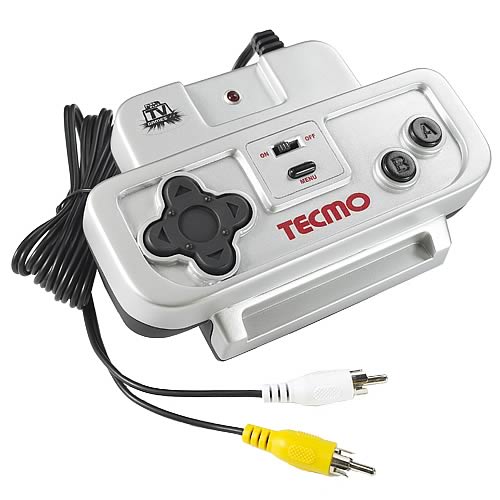
This was a product image used at EntertainmentEarth.com in 2006 when they were offering the Tecmo TV Game from Jakks Pacific for preorder. As this TV Game was never released, this image, possibly not depicting a finalized design, is likely all that the public will ever see of this unit. Given that a casing was already designed and shown to retailers, it is possible that the software was already completed when the decision to cancel the product was made. [Update: As noted at http://carlmuller.co.uk/gamelist.htm, the software was completed.] |
|
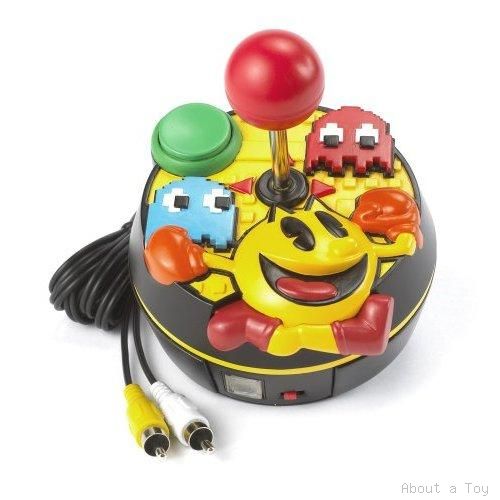
This was a product image used at a number of online retailers for the 2007 Jakks Pacific Namco 4 ("Arcade Gold, featuring Pac-Man") TV Game. The actual product, however, turned out to look markedly different upon release: tvg_pacmangold_final.jpg. Both the early and finalized form factors of this TV Game differed in design styling from all the other Namco TV Games. While the Namco 1-3 and 5 models were designed to evoke memories of the 1980s arcade scene, the Namco 4 used molded plastic Pac-Man character art on the base, resulting in more of a child-targeted feel. |
|
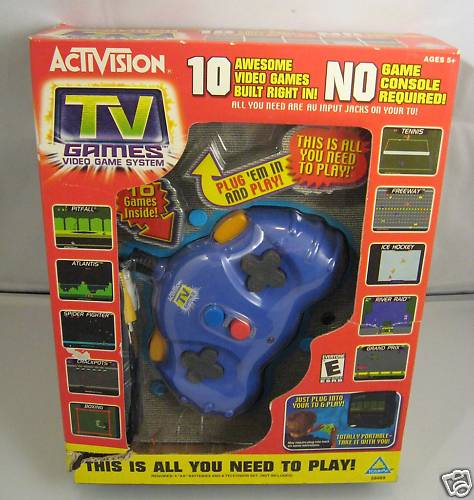
This was an image I found in an eBay auction for the original Activision TV Game, the 2001 release by Toymax that was the first in the TV Games line. After this release, the TV Games line (and the rest of Toymax) came under the ownership of Jakks Pacific. The effect of the new ownership is very evident when one compares this model to all later models; later models have much less generic styling both in the game controller's form factor and in the packaging. For each Jakks Pacific TV Game, the controller utilizes a design reflecting some specific aspect of the license, while the packaging shape is uniform across the line but is distinctively shaped when compared to other companies' products on a store shelf. In contrast, this earliest model features a gamepad design that has no relationship to Activision and comes packaged in a standard-shape box. |

|
This image of Jakks Pacific's 2004 reissue of the Activision TV Game, used with permission from evg2000.com, shows an unusual packaging form factor used only for this TV Game model (to my knowledge), but not for all units of this model. This is the form factor noted in the packaging evolution section as "transitional"; other units of the Activision TV Game reissue utilized the packaging which became the standard of the TV Games line from 2004 through 2006. While no actual proof exists in the public domain that this packaging was produced on a temporary basis while the company transitioned from the 2002-2003 packaging to the 2004-2006 packaging, it does seem to fit as an explanation. Note the 80s-retro joystick design, in contrast to the license-irrelevant gamepad designs used in Toymax's and Techno Source's Activision plug-n-play systems. |
|
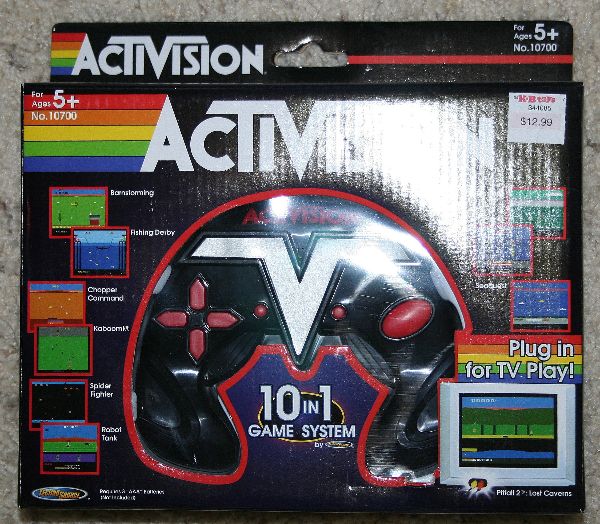
This image, used with permission from evg2000.com, shows Techno Source's Activision 10-in-1 plug-n-play system, produced in 2006. Packing Activision-owned Atari 2600 games mostly different from Jakks Pacific's earlier Activision plug-n-play system, the Techno Source model seems to have had shipped significantly fewer units, being more difficult to find both now and when it was released to retail. The controller is in the shape of an unusual, barely ergonomic design, unrelated to both retro gaming and Activision (aside from the 'V' from the company logo, a motif which does not extend to any of the rest of the controller's design). The controller being a gamepad also makes the presence of paddle game Kaboom! in the games list a little puzzling, though no less so than the inclusion of Pong, Breakout, and Circus Atari in Jakks Pacific's Atari joystick TV Game model. |
|
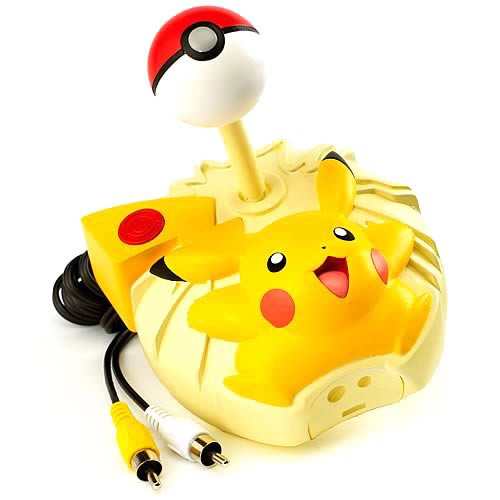
This was a product image used at EntertainmentEarth.com for the never-released Pokémon TV Game. Jakks Pacific acquired the master Pokémon toy license in 2006, and a TV Game system for the property, though seemingly never formally announced, was developed for them by HotGen. Whether or not the software was actually completed, it was at least sufficiently done that it was included in the MobyGames developer entry for HotGen founder Fergus McGovern. |
|
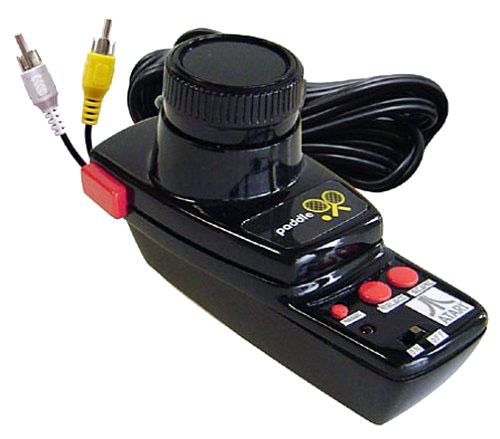
This image, contributed by AtariAge user pboland, shows a prototype for Jakks Pacific's Atari Paddle TV Game system (the image was used in early marketing for the system). Due to the need to include space for batteries and internal hardware beyond just controller circuitry, the form factor needed to be larger than that of the original Atari 2600 paddle controller. This prototype incarnation looks a bit like an original paddle controller mounted atop a grip extender, somewhat reminiscent of an original Star Trek Type I phaser slotted inside a Type II phaser. The final form factor eschewed the terraced look and was boxier in overall appearance. |

|
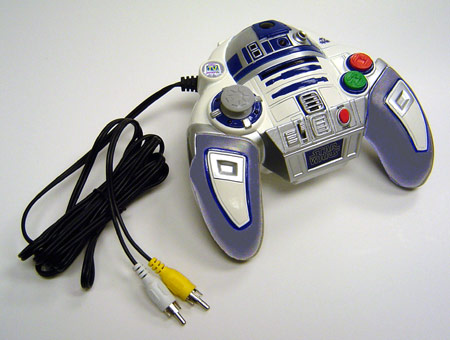
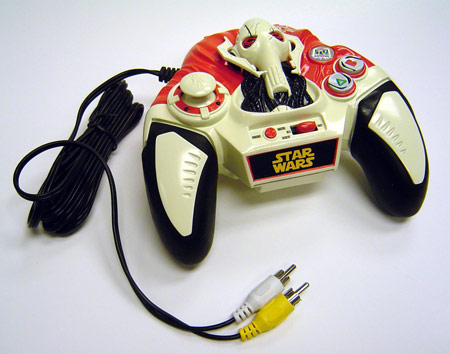
This image, contributed by AtariAge user pboland, shows the standard, and presumably most common, form factor of Jakks Pacific's Star Wars: Episode III - Revenge of the Sith TV Game system. This particular plug-n-play system is unique in that it was released in multiple form factors simultaneously (more or less; all were on store shelves during the same general window). Besides the Darth Vader motif, the other three form factors were patterned after R2-D2, General Grievous, and Yoda (these images also contributed by pboland). |

|
This image, contributed by AtariAge user pboland, shows Vol. 2 of Radica's Sega Genesis plug-n-play series. Note the two-part construction, with a controller separate from a "mini Genesis" base unit. While this type of build would become common with plug-n-play systems that had two controllers (with the notable exception of Jakks Pacific's two-player editions), it was unusual among single-controller releases. Nearly all of Radica's Genesis series used this layout; however, their Menacer light gun system went without the base unit and embedded the PCB for the Genesis-on-a-chip within the gun grip, and their Super Sonic Gold (Vol. 3) system built that PCB into an extension at the top of the controller (these images also contributed by pboland). |